Aws Application Development Solutions India

Internet of Things

Introduction

Over the years appliances around the house have become smart. From the days of mechanical control to device running multiple programs. Your Air conditioner or refrigerator may run in a different setting depending on the ambient temperature and load put on it. Pretty much every house hold appliance is now capable of handling complex logic.

The way devices present and function has changed a lot largely due to the advances in electronics like embed systems and control systems. No where is this more evident than in industrial and enterprise settings. Production, Inventory, supply chain all run on electronic devices capable of running minute pieces of code. In face the scale of production in our era wouldn’t have been possible without the such technologies – devices being collectively in sync with each other.

What is IoT?

The collective ensemble of all interconnected electronic devices sharing data and or responding to instructions. The scope of interconnected devices though includes devices of all sizes, the intent of IoT is to connect to devices around us, things we use and have an actionable end point.

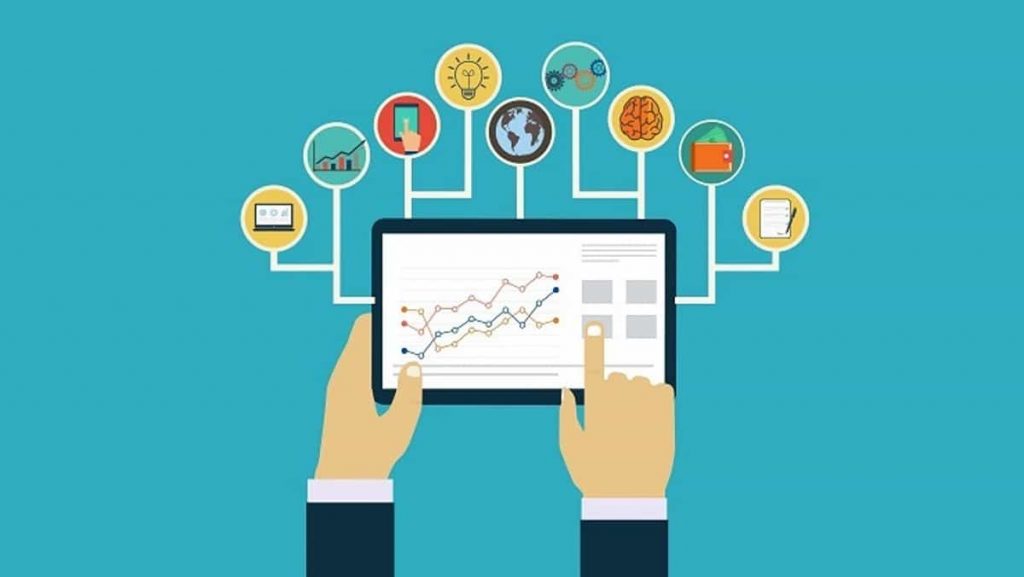
The concept is pretty simple – devices, ranging from fitness and medical devices, wearable tech, electrical, electronic appliances have a lot of data to offer should we be interested. As we have learnt from experience, any data from any source is invaluable. It makes sense to accumulate the data generated from such sensors to generate information and eventually pertinent knowledge to improve the application. IoT also includes devices which can respond to requests delegated to them remotely form a human master or a human like server master.

This isn’t some thing new. The idea of devices like refrigerators and TVs connected and controlled by devices like mobiles and computers is common place. What’s new is the scale and the impact of the implementation.

How it works?

A typical Iot application has devices submitting data to a central server via the internet over wifi, wired network or even a bluetooth tethering device. (There’s loads of research on new low powered low range low bandwidth networking devices especially for devices with IoT capability.) Each device is provided  with a unique Id to address and target it to receive and send data. The mechanics of the way it handle the network part, reaches to the server, authenticates itself, submits data vary from vendor to vendor.

The application server receiving the data processes based on its logic like any other server based application. There exists a cause and effect matrix which may trigger a response – an adjustment in setting or a signal to an actuator or a notification in the mobile application.

IoT application is essentially an event based application with the triggers being human or data from a sensor. For some part the application is like any other server based application. But the interface that manages the devices – i.e the data, metadata, of the different kinds and versions of devices, connecting, working, troubleshooting etc. is, as evident, fairly complicated and intrinsic to IoT.

IoT has already begun the revolution in the way we interact with devices and we are loving it.

Smarter greener, more energy efficient homes are already here. There is tons of research and development in the field with funding for start ups exceeding $2.5bn. Wearables are the latest tech gadgets for fitness and healthcare monitoring. Cities are investing heavily in to IoT for more efficient smart grids, roads and public transport, water distribution, to waste management, urban security and environmental monitoring.

The market for IoT is huge. There isn’t a single industry or segment set to benefit from it. It has the potential to impact us all. This will be one of the fastest growing technologies in days to come.

Serverless Application Development India

Serverless – what it means for your company.

In a recent a post on serverless applications I explained what it is from a technical point of view.

Technicality a side I wanted to give you an idea about what it means to you to go ahead with a serverless application and how you benefit from it.

Typically you need to serve both web and mobile users and more commonly have mobile apps to provide meaningful service to your customers. So the server, typically needs to support the administrative and client side of the web application and the client mobile applications.

Having to go with a serverless architecture changes the way your business logic is implemented. Your server is now a collection of independant tasks which run in parallel and may request eachother as and how needed.

We have the ability to simplify and reduce any complex architecture in to series of processing streams delegated to handle cases either specific or more generic depending on the logic.

There is no one size fits all for a solutions architecture. I’d be long out of a job if it were so.

Another neat trick we can do in a serverless architecture is to trigger task execution streams independent of server’s usual workload. The server can do as much heavy lifting as you need it to, but still serve you seemlessly.

At The Indian IT Co., we developed a good number of serverless applications and I can whole hartedly recommend it, if you are contemplating that as a choice.

The architecture and the development fits very well with agile methadology and being a micro service architecture, it is best suited be used in applicaitons requiring fault tolerance, high availability, and scalability.

As I discussed in the previous post, The monetary benifits are pretty straightforward – The agile methadology for web and mobile app development means you have a project that’s sticking to schedule and cost. More to it, the server development is considerably faster and cheaper than a monolith.

These are some non ignorable points to any company startup or enterprise.

My experince with AWS and lamdba functions shows me that lambda offers just so much out of the box. Logging, maintainance, deployment scaffolding, Access permissions to name a few.

We use lambda pretty fluently and given the nature of interconnectivity need to frutfully implement a company’s stringent requirements, we fully exploit lamdba’s quick access to services and controlable fine grained security permissions.

Serverless architecture is even being used to develop PCI DSS complient solutions. I.e it provides a stable platform to build security in to the application at the code level, taking security above and beyond what can be provided just by permissions and ACL.

App Development Consultants India

Security in Cloud

Since it caught on, any application built is build to leverage the cloud – more than 70% of all business, according to CSA. Makes you wonder if there is any other kind of IT platform and how we ever managed without it.

Cloud doesn’t just offer the cost and management benefits but gives the freedom to build ‘the best possible’ application – and why not? On a traditional IT infra you have to accommodate a certain amount of traffic and hence distribute your resources in the order of importance. But no more.

Applications which used to be server based designed to be monolithic are now cloud based ensemble Eco-spheres having many moving parts and interconnected services. Which is great news. I mean, we are only doing this in our pursuit to build applications which bring out great user experience. We are now building apps which are highly specialized, ever more complex and intricate.

On the flip side, it isn’t just the cloud technologies that have gotten better over the years. Threat to application and data security on and off cloud has increased just as well.

Most cloud service providers offer security of the cloud i.e your provisioned IT infrastructure is as safe as having it in-house. This doesn’t mean that an application deployed in the cloud is inherently living in a enterprise class security model. It is up to the architect and the developers to see to it and that the best practices are implemented in to the system. Security of the cloud is only as good as the developer using it to provide security in the cloud.

Some of the common data security threats to an application are breaches through hijacked accounts, Malware injection, or even a disgruntled employee, MITM and DOS service disruption attacks.

For the most part breaches occur due to lack of foresight or technical shortcomings and consequently lack of mitigative methods built into the architecture and IT management.

Its a good idea to think about risk assessments, security requirements, regulatory and compliance requirements and data disaster recovery strategies in addition to fault tolerant and scaling policy prior to sketching out application architecture.

Data encryption – in flight, at rest, SSL authentication and authorization, Access control, Distributed service and content delivery to mitigate any single point of failures – are few of the aspects to be taken in to consideration.

Securing third party API connections is just as important. The amount of data exchanged and possible nodes of data breach, increase with the number of API services used. The way the api communicates with the application needs to be secure with out vulnerabilities.

A good security model forms an application’s fortress. Security should be a concern for application of any size and should take precedence right from App specifications rather than as an after thought.

A good start would be with Murphy’s law in mind.

Having such specifications makes it easy to choose the proper development framework, supported services, third-party providers and deployment environment that enforce the over all security.

App Development Consultants India

Serverless Application Development

What it is, How it works, and what it means to you.

Aws Application Development Services India

Technology Trends 2017

Technology has always spearheaded change in businesses. Be it the way they work, think market or innovate. So much so that it has often necessary for businesses to pay attention and take notes. Technology empowers and facilitates doing more – easily. Businesses have to adapt and adjust their course to available technologies to gain an edge over the competition.

2016 ended with buzz words like IoT, Serverless Architecture, AI, m-commerce etc. Here’s some more description about what they are and what to expect from them in the year to come.

Going mobile

Mobile applications are set to see a good leap in tech and usability. We are currently using our mobile phones about 250 times a day. Younger groups use it pretty much every other minute. Device makers and service providers are pouring in tech to make a cutting edge for them selves with features like supercharged application services like the Google AMP, APP streaming services and increased app integrity and security. Numerous studies have shown that a faster better served application is more likely to have more view-ability and higher CTR.

Very thing mobile – from Marketing, sales to customer service. Integrated web and mobile applications are increasingly becoming tools of customer engagement, retention and brand establishment rather than targets of sales process. Mobile Applications in specific give the ability to deliver content – many a times personalised and targeted to the user directly which makes it invaluable to any marketing process. Especially in the B2C industries.

M-commerce.

This is particularly important as the portion of mobile based eCommerce far exceeds other platforms. These days ‘Wallets’ like Google Wallet and Apple Pay are favoured over Cards. If you are into e-commerce be sure to be into M-commerce.

Hybrid Applications

You may already know about hybrid applications based on Cordova framework. Native applications are giving way to hybrids and packaged web applications – less than 10% of new apps created are native code. This trend will continue despite Native code frameworks -swift and ADK improving their tool-kits to increase developer productivity. It would be difficult to stay ahead of Apache. Their developer community is vast and very active. What started as a support for simple web pages to run as mobile applications has evolved in to a full fledged eco-system.

The importance of User experience and interface has come to decide application’s success. Users tolerance to bugs and issues in a released applications is getting down to zero. There are just so many contenders out there the users can try that they just move on. No second chance. You’d do the same.

More and more, expectations from UI is bordering the lines of AI. Interfaces have become more proactive, engaging and more than just drawing on activity history. This is a form both the users and businesses have come to push for as the user attention span and engagement time on the application, web or mobile, keeps decreasing. Dynamic UIs are aimed to yield an action or complete the required task quickly.

A.I

Amazon, Google, Microsoft and IBM have started offering services in AI section – i.e analytics, cognitive interfaces, machine learning. Increase in IoT is going to add fuel to fire. One such trend is Location based service – Analytics on user location and tailored offers provided by applications like Apple iBeacon and Google Beacon.

We should see a rise in data analysis and information building trend as tech is becoming commonly available for non enterprise applications.

VR & AR

Device makers are keen to push Virtual and augmented Reality in to budget smart phones . We should expect to see more and more applications and games exploiting this.

IoT

The usage of wearable devices has been increasing at a steady 20% every year and is expected to cross more than 200 Million units by 2020. All the major hardware manufacturers have some sort of wearable tech offerings. And that’s just half the story. More and more devices in general are going to be connected to the internet. The numbers are increasing exponentially and are expected to exceed 50 Billion by 2020. This is great news for mobile apps as IoT devices are primarily controlled by smartphones.

Wearable devices along with IOT is the biggest growing market to look out for.

You can read more about IoT here.

Server-Less

One of the most promising paradigms of software architecture and development of 2017 is the Server-less Applications. What this is that computing service providers have begun to offer abstracted services which would typically form the base for most server application features.

This entails developers have a different approach to design and architecture of the application to fit in to the server-less architecture.

Read More about Server-less Architecture.

Service Based industries

Businesses with highly targeted and niche client base are expected to increase. Deep intensive service rather than wide extensive. This makes for a better more specialised marketing and customer engagement strategy as well.

Automation Based service.

Internal automation is among the key focus are in most businesses. By utilising automation, businesses can reduce the amount of manual labour required from their employees and either eliminate that payroll expense or allow their employees to do tasks that are less mundane.

Though it has been around for decades, automation typically was restricted to companies which could afford the top names of IT Development consultancies. But emerging technologies and platforms have placed it within reach of most small and medium businesses.

Artificial intelligence is making its way in to businesses as a common tool be it marketing, customer engagement,customer data capture and data mining. More data is always welcome. It leads to more through analysis and knowledge building and finally better customer service.

IoT has to top the list of most interesting business sector to come up in 2017. There are more number of startups and more funding to this sector than with any other.

bugs and issues in a released applications is getting down to zero. There are just so many contenders out there the users can try that they just move on. No second chance. You’d do the same.

More awesome stuff to come..

Aws Application Development Services India

Marketing Trends in 2017

2016 saw some good changes to the landscape of small and medium businesses. Needless to say the market space is dynamic and effected by constantly evolving technologies. Here’s what 2017 has to offer for you.

Service Based industries

Businesses with highly targeted and niche client base are expected to increase. Deep intensive service rather than wide extensive. This makes for a better more specialised marketing and customer engagement strategy as well.

Automation Based service.

Internal automation is among the key focus are in most businesses. By utilising automation, businesses can reduce the amount of manual labour required from their employees and either eliminate that payroll expense or allow their employees to do tasks that are less mundane.

Though it has been around for decades, automation typically was restricted to companies which could afford the top names of IT Development consultancies. But emerging technologies and platforms have placed it within reach of most small and medium businesses.

Artificial intelligence is making its way in to businesses as a common tool be it marketing, customer engagement,customer data capture and data mining. More data is always welcome. It leads to more through analysis and knowledge building and finally better customer service.

IoT has to top the list of most interesting business sector to come up in 2017. There are more number of startups and more funding to this sector than with any other.

Marketing

Social media Marketing is set to increase its share of marketing. with that the competition among businesses  to catch the users attention is growing intense and as a result Paid advertising in Social platforms is getting more expensive.

The way platforms publish organic content is due for an upgrade. Facebook has already done this. According to few studies done, your content may reach about 20% of your followers. This is done partly to reduce the followers being bombarded with promotional material and partly (well.. mostly)to promote businesses to opt for paid advertisements.

The work around for that would be a more targeted advertising, paid or otherwise. Also, as a trend in general, users are spending more and more time on mobile devices. Businesses need to develop strategies for multiple streams of content and promotions for specific focus groups and specific to devices.

Content based marketing has been a part of Social marketing for the past few years and will be increasingly so in 2017. Content based video marketing has been gaining momentum as an easy and readily available content for younger groups. Businesses cannot afford to ignore video content as it gives them an edge over competition and more access to client base.

Most businesses have been focusing on Social media that SEO has taken a back seat in their marketing strategy. Google typically keeps changing the way it ranks web pages but with addition of AI learning, google may include more factors like usability and user experience. (Penguin 4.0 has been a game changer is page ranking algorithms and SEO.) For marketeers with SEO holds tangible profit with the sequential updates released.

More focus on Millennials. The generation than grew up in the internet is entering the workforce and coming of age. As baby boomers grow older, millennials are becoming a more important consumer demographic that businesses will have to cater to. They currently represent 37% of online market and growing. There have been good number of studies on this group to suggest their buying and decision making process are influenced extensively by price and peer recommendations on social sites. Quick and fast service seem to be the requirements of this group often willing to pay premium for such service.

Technology

Very thing mobile – from Marketing, sales to customer service. Integrated web and mobile applications are increasingly becoming tools of customer engagement, retention and brand establishment rather than targets of sales process. Mobile Applications in specific give the ability to deliver content – many a times personalised and targeted to the user directly which makes it invaluable to any marketing process. Especially in the B2C industries.

Mobile applications are set to see a good leap in tech and usability. We are currently using our mobile phones about 250 times a day. Younger groups use it pretty much every other minute. Device makers and service providers are pouring in tech to make a cutting edge for them selves with features like supercharged application services like the Google AMP, APP streaming services and increased app integrity and security. Numerous studies have shown that a faster better served application is more likely to have more view-ability and higher CTR.

This is particularly important as the portion of mobile based eCommerce far exceeds other platforms. These days ‘Wallets’ like Google Wallet and Apple Pay are favoured over Cards. If you are into e-commerce be sure to be into M-commerce.

The importance of User experience and interface has come to decide your application’s fate. Users tolerance to bugs and issues in a released applications is getting down to zero. There are just so many contenders out there the users can try that they just move on. No second chance. You’d do the same.

More awesome stuff to join